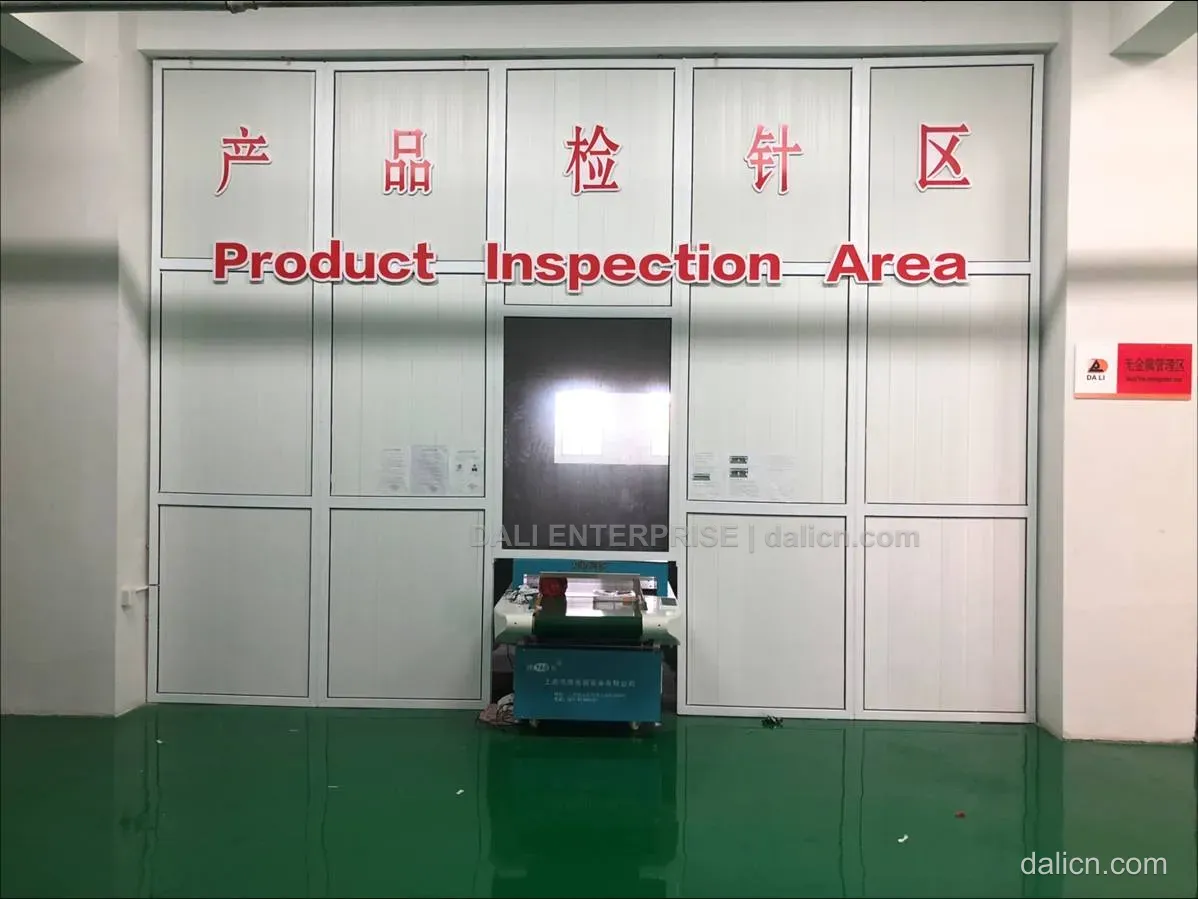
Order execution: specification, inspection and follow-up
Quality Control System
DALI carries your approved specification through material checks, production inspection and final packing review. Measurements, workmanship and assortment details are checked at the relevant stages, with findings and corrections recorded for your team's approval.
Control the approved product through bulk production
01
Establish one approved production reference
DALI brings the approved sample, measurement tolerances, materials, artwork, labels and packing instructions into one production reference. Technical and inspection teams work from the agreed revision, including your buyer manual and required tests. This keeps sample decisions connected to the product being made.
Approved sample version and dated specification
Measurement method, tolerances and construction details
Current artwork, label and packing references
02
Review incoming materials against approved references
Incoming fabric, yarn, elastics, trims and packaging are checked against approved material and color references. Relevant lot details help trace a finding to the affected materials or production. Substitutions and unresolved differences are brought back for a decision before use.
Material identity, color reference and relevant lot details
Required material checks and test results
Approval of proposed substitutions or corrections
03
Use in-process findings to correct the work
In-process checks address measurements, seams, workmanship, finishing and component placement while production is underway. Findings are linked to the affected work, followed by an agreed correction and recheck. Approved changes are communicated to production and inspection teams so the same requirements guide both.
Measured result or defect compared with the requirement
Affected quantity, production stage and agreed action
Recheck result and any remaining approval question
04
Define the test plan for this product
DALI reviews the testing plan with your quality team, covering the material or product, method, acceptance criteria and timing. The plan reflects the wearer, end use and destination. Buyer-nominated or third-party laboratories and submission requirements can be agreed before the relevant approval stage.
Identified sample, material or finished-product reference
Test method, acceptance criteria and report requirements
Timing of testing relative to the relevant approval
05
Agree final inspection and acceptance criteria
Final inspection follows an agreed lot definition, sampling plan, inspection level and defect classification. Your team can specify the report format, attendance and correction or reinspection arrangements. AQL sampling assesses a defined sample from the lot; it is not a check of every unit.
Defined lot, sampling plan and defect classification
Required inspection report and acceptance decision
Correction and reinspection arrangements where needed
06
Check the assortment and retail pack before shipment
Packing review checks that the approved assortment reaches the correct selling unit and carton. Size and color ratios, quantities, label versions, required barcodes and carton marks are reviewed with shipment instructions. Inspection and packing records support your team's shipment decision.
Size and color assortment by selling unit and carton
Approved labels, pack artwork and carton marks
Required reports and shipment instructions
Order-specific quality planning
Inspection stages and the records to agree
The control plan connects production with the buyer's approved reference. The timing, methods and required records are agreed for the product and order.
Stage
Working reference
Record or decision
Development and approval
Sample version, technical specification, tolerances, labels and pack instructions
Current approval reference, sample comments and unresolved decisions.
Incoming materials
Approved fabric, yarn, trim, color and packaging references
Material identity, relevant lot details, check results and approval of any change.
Production checks
Measurements, construction, workmanship, component placement and finishing
Recorded finding, affected work, proposed action and recheck result.
Product testing
Specified sample, test method, acceptance criteria and reporting arrangement
Applicable report, result and any required follow-up before approval.
Final inspection
Defined lot, sampling plan, defect classification and acceptance criteria
Inspection result, buyer requirements and reinspection arrangements where needed.
Packing and shipment review
Assortment, unit quantities, labels, carton marks and shipment instructions
Packing records and the reports required for the shipment decision.
Recording a defect is not the same as resolving it. The response needs to connect the affected work, the agreed action and the result of the follow-up check.
01
Identify the finding
Record the requirement, observed result and affected material or work. Establish whether the issue is isolated or repeated before deciding the action.
02
Agree the disposition
Review correction, sorting, replacement or additional testing as appropriate. Clarify who must approve a change from the agreed specification.
03
Recheck and close
Compare the corrected work with the approved reference and record the result. Unresolved findings need a decision under the agreed buyer requirements.
Sorting, rework or reinspection does not automatically change the acceptance criteria. Any proposed deviation needs the approval required by the buyer's protocol.
Useful information
Start with the details you have
01Approved sample and current specification
02Defect definitions and inspection plan
03Test methods and acceptance criteria
04Label, retail-pack and carton requirements
05Buyer inspection protocol and required reports
Insights & knowledge
From sample approval to production
Keep sample comments, material choices and colour decisions aligned before bulk production.
The fit may be approved while the print or packaging is still being developed. Make that distinction clear before the order moves into bulk production.
A fabric swatch can look right on its own. Before bulk production, see how the shade works with the lining, elastic and other visible parts of the garment.
Share the protocol or buyer manual before production planning. DALI reviews the required stages, measurement methods, defect definitions, sampling plan and reports with your team. Buyer or third-party inspection arrangements, notice and reporting requirements are agreed before the relevant stage.
02Does a final AQL inspection replace production checks?
No. Final sampling evaluates a defined lot against an agreed plan. Incoming-material checks and in-process review address issues earlier in production. The stages serve different purposes and need the same approved product reference.
03What happens when an inspection identifies a problem?
The finding is compared with the agreed requirement, and the affected work and proposed action are reviewed. Depending on the issue, the plan may involve correction, sorting, additional testing or reinspection. A failed result is not an approval; any acceptance decision must follow the buyer's agreed requirements.
04What do you need to review our quality requirements?
Send the available specification or technical pack, sample comments, buyer manual, required tests and packing instructions. Identify the current revision and any unresolved point. The initial discussion can begin before every document is complete.
Send the specification, buyer protocol, required tests and packing instructions you have. The team will review the inspection stages, criteria and reporting needed for the proposed program.