DALI's portfolio includes the factory assessments and textile standards shown below. Supporting records and their applicable site, material and product scope are provided during supplier approval.
China manufacturing network
Chinese materials. Connected garment production.
Keep your fabric and elastic development connected to the finished garment. DALI's China network brings together knitting, dyeing, elastics, garment plants and Jiangsu sock production, with additional garment and sock factories in Cambodia. Your buying team can review the material specification, proposed factory and bulk production requirements with one manufacturing group.
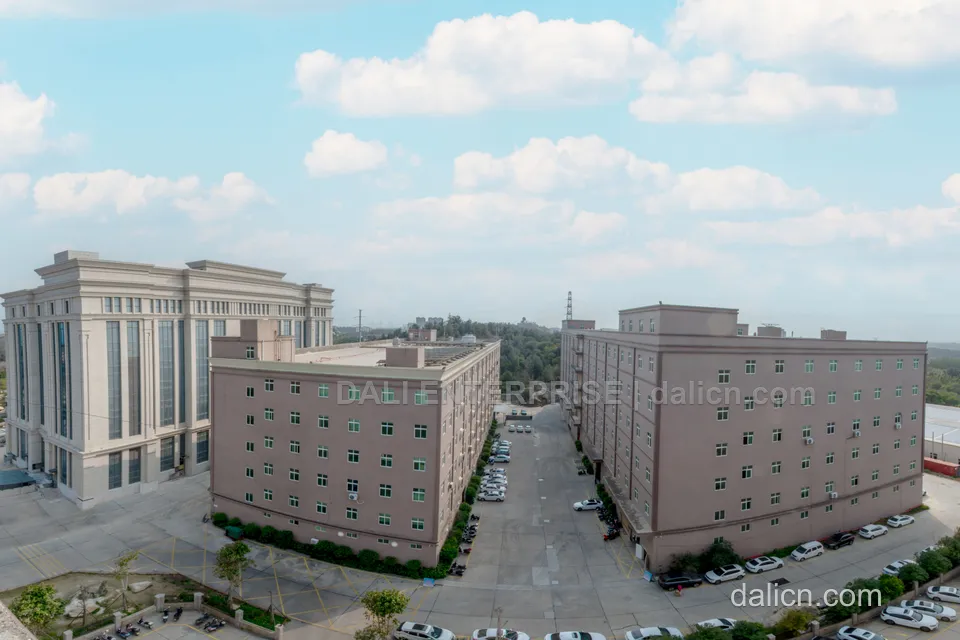
DALI headquarters campus, Jinjiang
Jinjiang, Fujian
Jinjiang headquarters
Design, development and international trade
Operations and development scope
Founded in Jinjiang in 1986, DALI coordinates design, research, product development and international business from its headquarters. The development team connects your product brief with the relevant material and manufacturing teams.
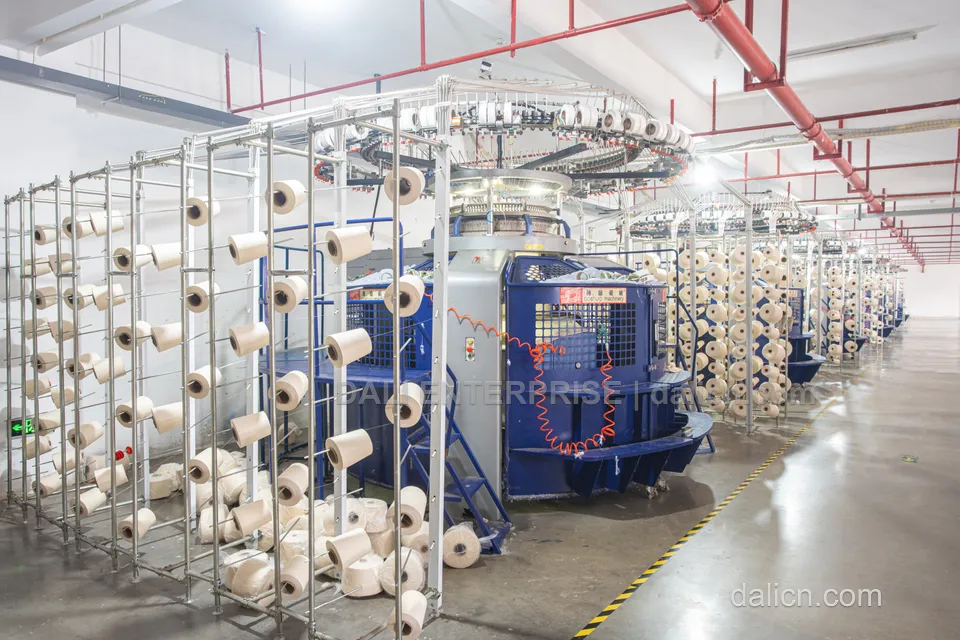
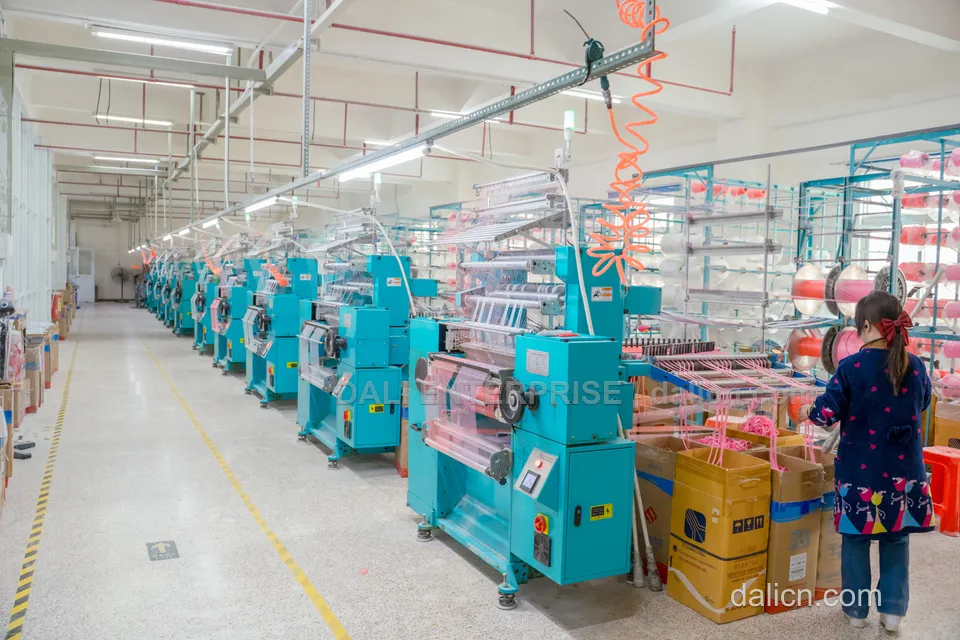
DALI's China network includes fabric manufacturing as well as finished-product production. Fabric construction, composition, weight and stretch are considered together with the garment specification, or discussed as a separate bulk fabric program.
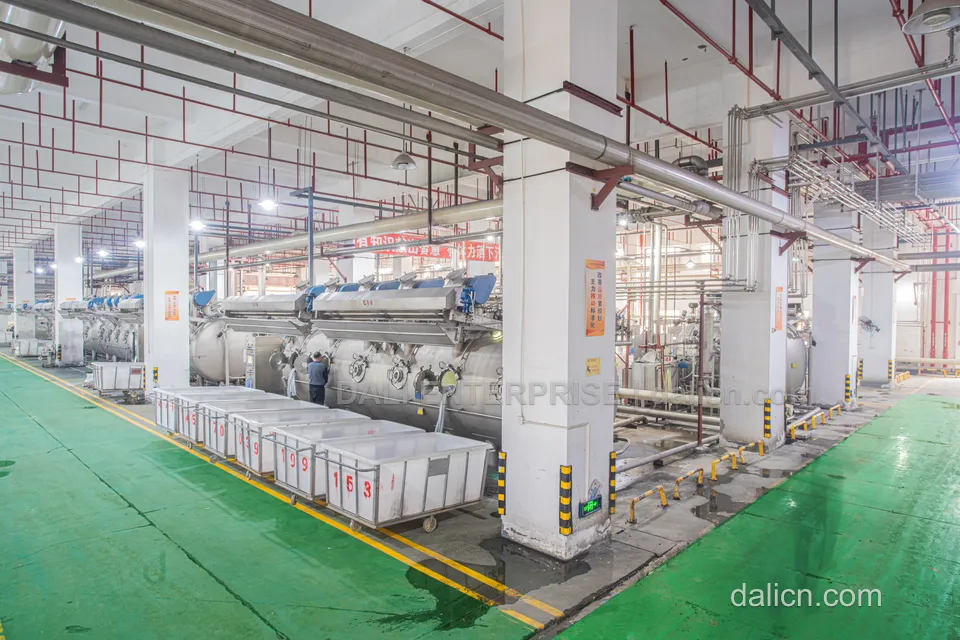
DALI's textile facility adds dyeing and finishing to the manufacturing network. Color references, material requirements and testing requests can be reviewed with the fabric specification before the production plan is agreed.
DALI's elastic production connects component development with apparel manufacturing. Discuss tape width, construction, color, logo repeat and attachment requirements for waistbands, straps and other garment components.
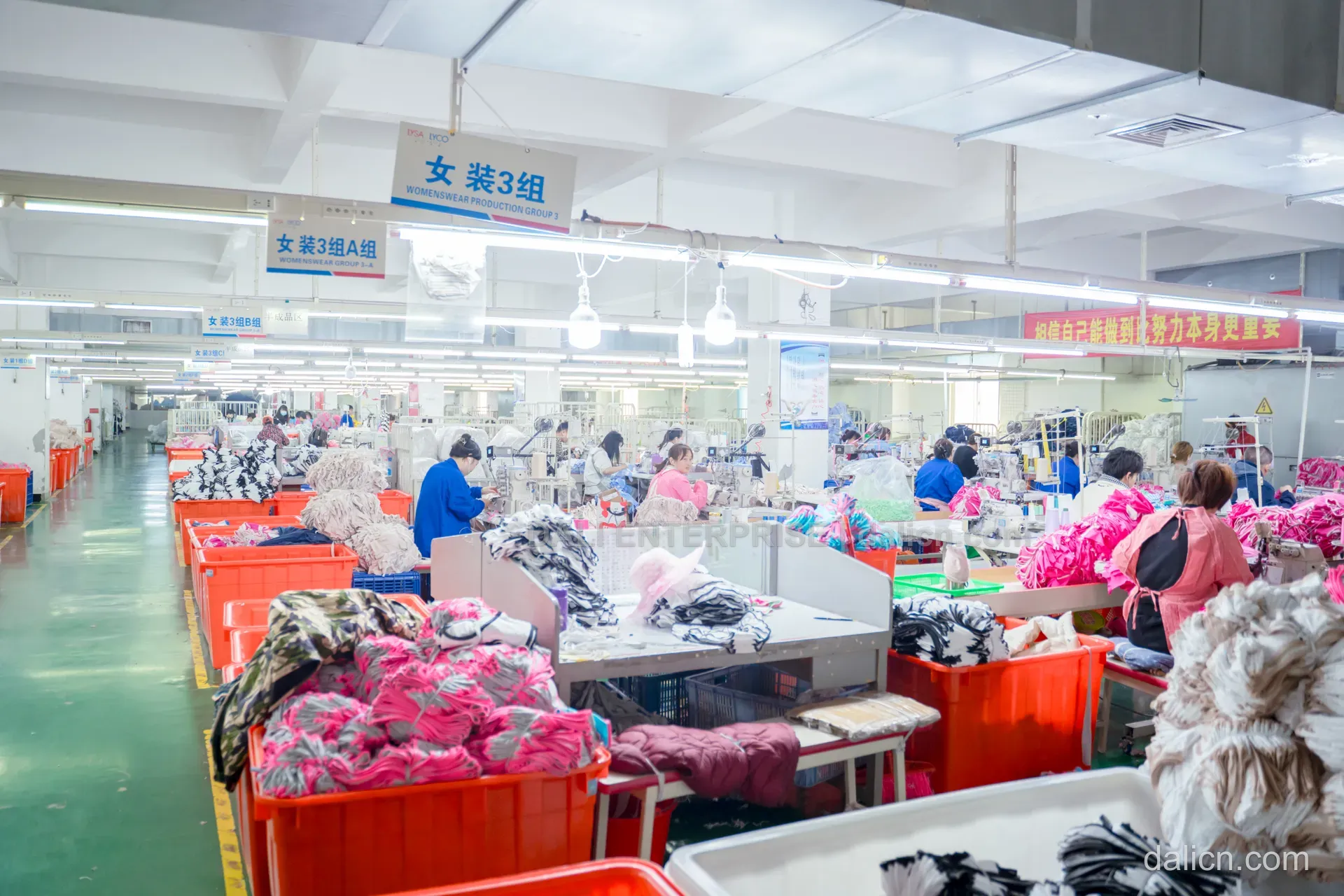
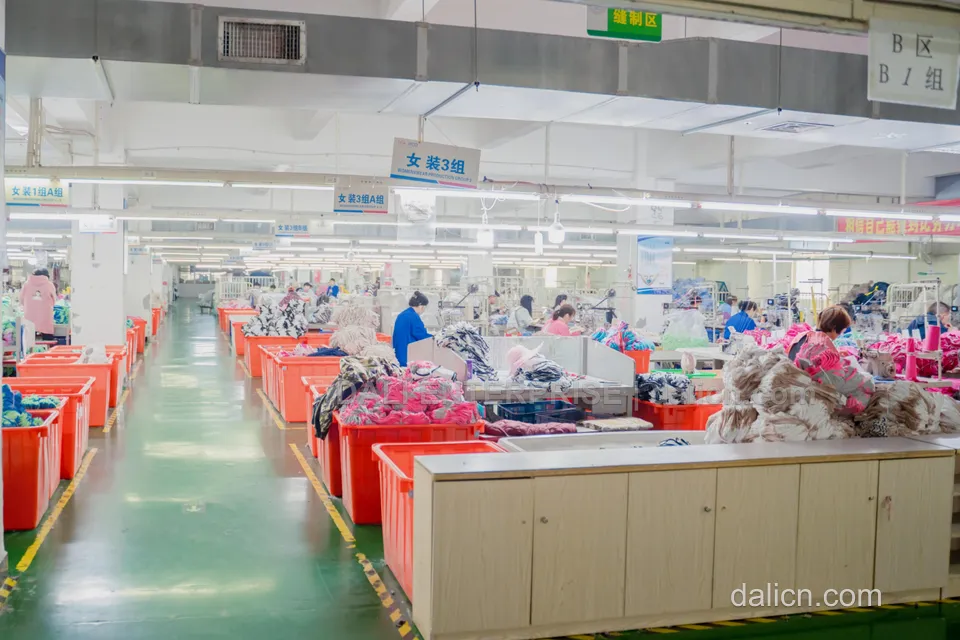
DALI's Fujian garment production plants connect material development with finished apparel. Cutting preparation and sewing teams work from the agreed product specification, approved samples, material requirements and packing instructions.
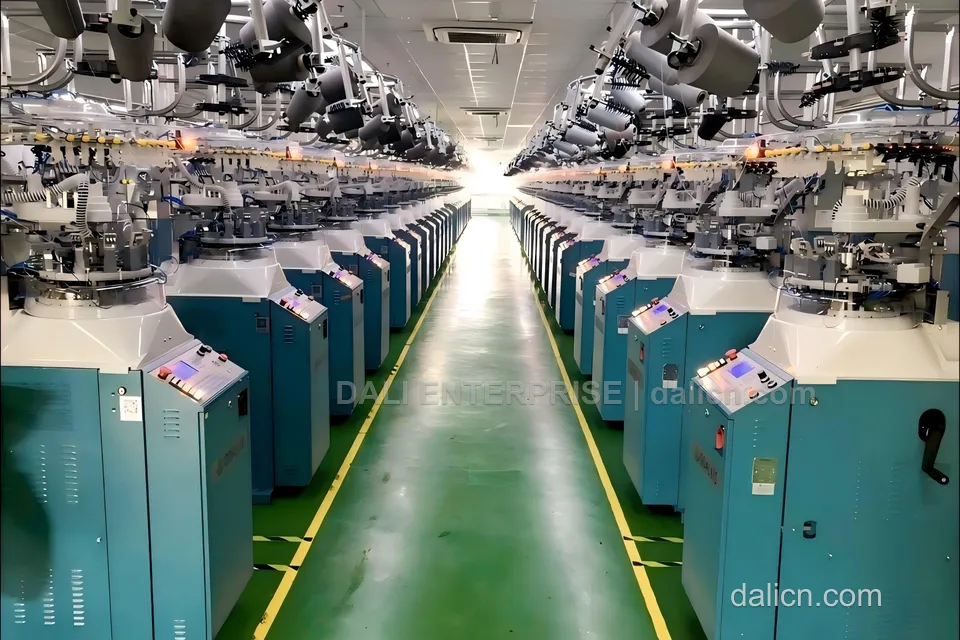
The Jiangsu factory adds dedicated sock manufacturing to DALI's China network. Yarn, knitted artwork, size ranges, finishing, inspection and retail pair packs are developed around the intended sock assortment.
Established in 2015, DALI's Cambodia network includes three existing factories: Factory I and Factory II for garments, and Factory III for socks. Together they provide 80 garment production lines and 700 sock knitting machines. An additional campus has entered trial production and is not yet in full operation. The group annual capacity of 180 million pieces covers China and Cambodia together.
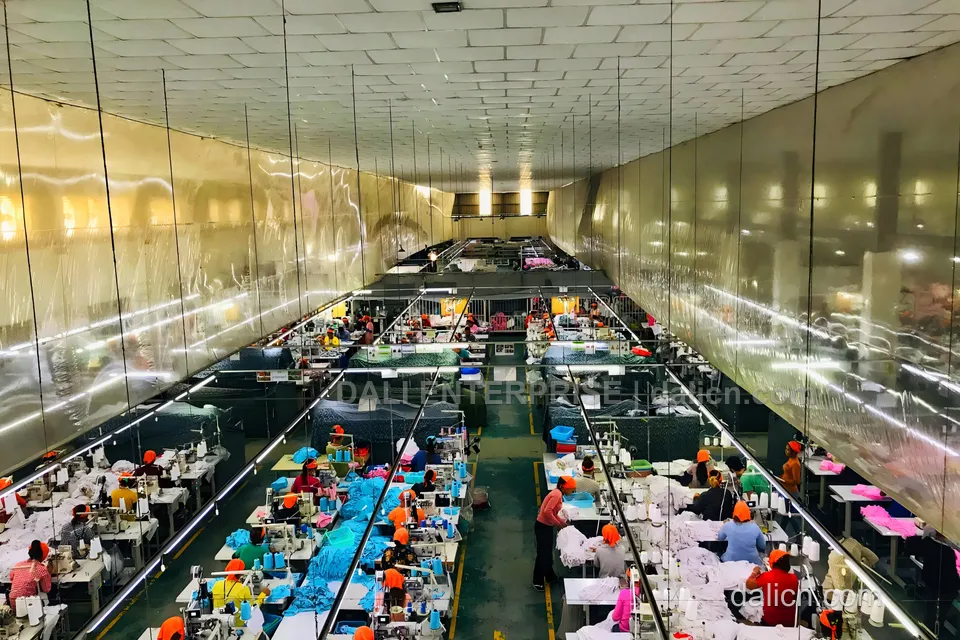
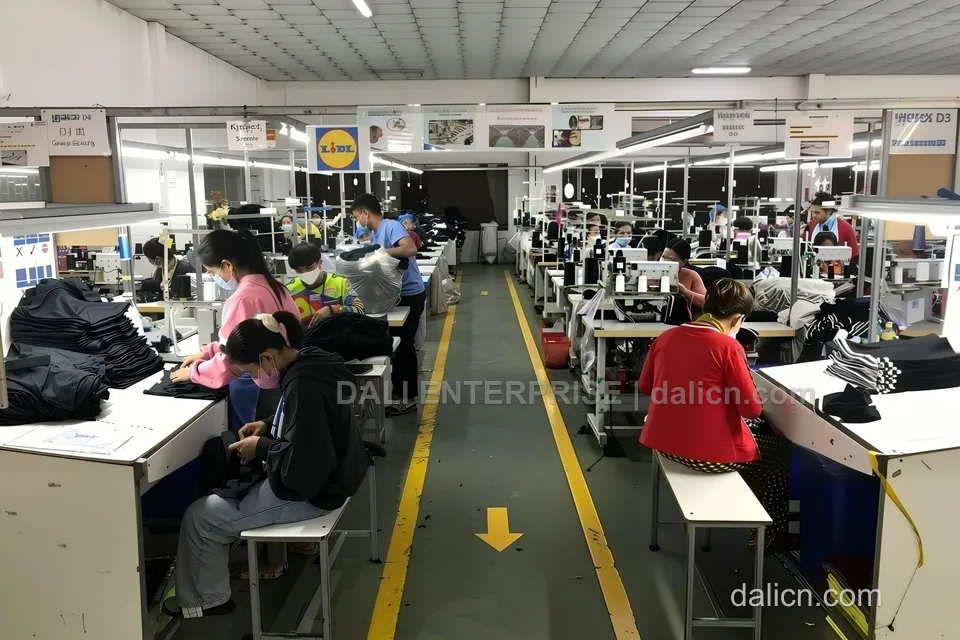
Garment production floor, Cambodia Factory I
Existing factory
Factory I
Garment manufacturing
Production lines
35
Employees
980
Factory area
9,096 m²
Operations and product review
The first factory connects garment production with cutting preparation, inspection and packing. Approved samples, fabric specifications and buyer instructions guide the proposed bulk order.
Cutting preparation
Garment production
Inspection and packing
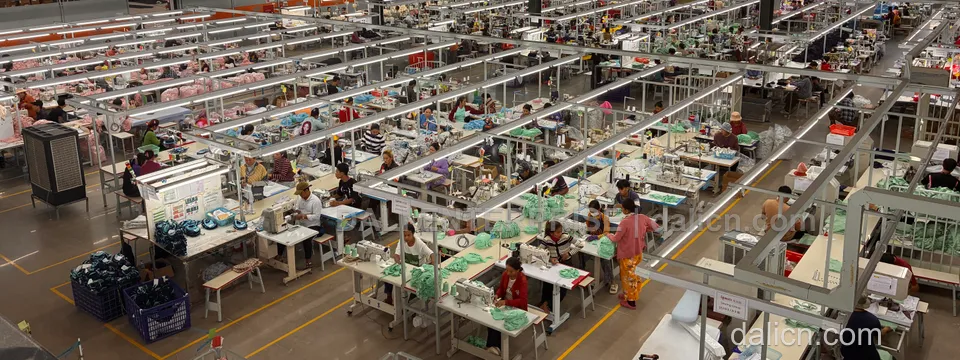
Garment workshop, Cambodia Factory II
Existing factory
Factory II
Garment manufacturing
Production lines
45
Employees
1,200
Factory area
9,500 m²
Operations and product review
The second factory provides another garment production operation within DALI's Cambodia network. Sewing, in-process review and finishing requirements are coordinated for the product and production specification.
Garment sewing
In-process review
Finishing and packing
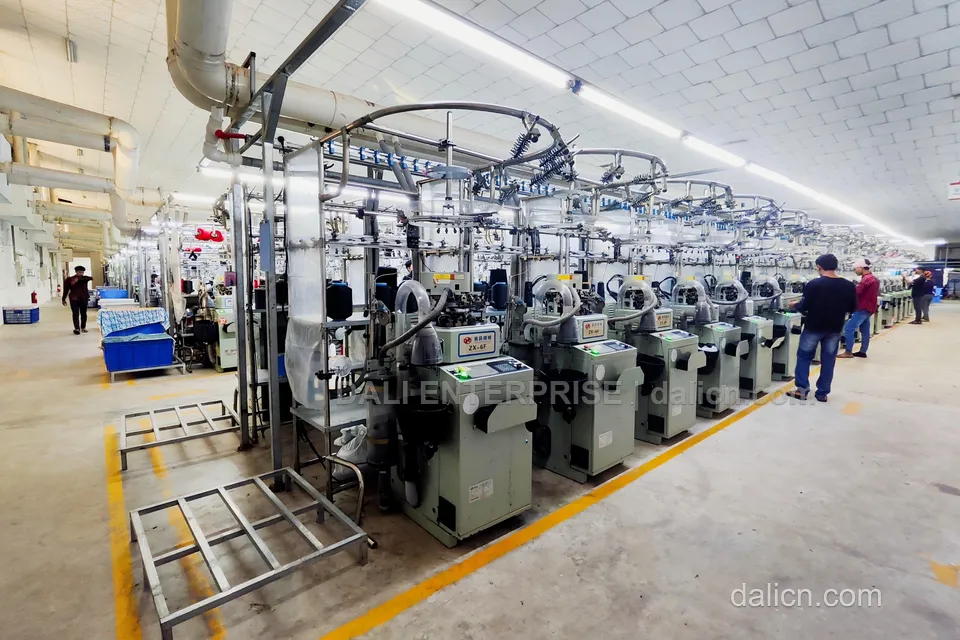
Production workshop, Cambodia Factory III
Existing factory
Factory III
Sock manufacturing
Sock knitting machines
700
Employees
520
Factory area
8,000 m²
Operations and product review
The third factory adds sock manufacturing to the Cambodia network. The project brief identifies yarn, construction, knitted artwork, sizing, finishing and pair-pack requirements for the proposed assortment.
Sock production
Finishing and inspection
Pair-pack requirements
DALI's annual capacity of 180 million pieces is a group-wide figure covering China and Cambodia together. The factories below form part of that network.
Trial production · Construction ongoing
New Cambodia production campus
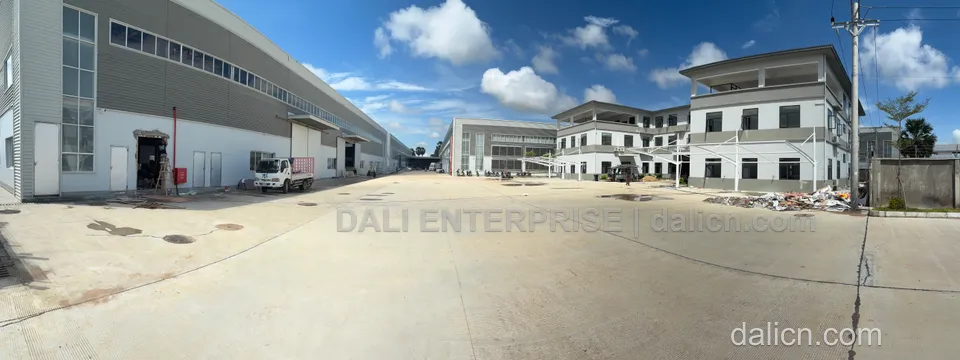
DALI's new production campus in the Phnom Penh Special Economic Zone is in trial production. Construction and fit-out are continuing; the campus is not yet in full operation. The development plan includes garment and sock capacity, solar generation and energy storage; these targets are separate from current group capacity.
Current status confirmed on 24 October 2026: trial production is underway, with construction and fit-out continuing.
New Cambodia campus exterior. Trial production is underway; construction and fit-out are continuing.New Cambodia campus workshop during trial production. The campus is not yet in full operation; construction and fit-out are continuing.
New-campus specifications
Site area
36,000 m²
Building area
30,000 m²
Planned garment lines
30
Planned sock machines
1,000
Planned employees
2,000+
Original expansion plan
Q2 2026Main structure completion
Q3 2026Trial production
Q1 2027Full operation
LABS (Life and Building Safety) program target: Q1 2027. The planned scope covers fire safety, structural integrity and emergency systems.
New-campus target capacity
Garments
6.0M pieces / month
Socks
4.0M pairs / month
30M+ pieces group monthly capacity after expansion (target).
DALI's fabric, dyeing, elastic and garment teams work from the same product requirements. A waistband change is considered with garment fit; a fabric revision is considered with construction and dimensional stability. Material references and sample comments establish the combination to be carried forward, rather than approving each component in isolation.
02
Production records and stage review
ERP-supported tracking connects material readiness, production status and inspection information. A designated contact coordinates factory questions and progress reporting, including weekly reports for the agreed program. Open changes are reviewed with their effect on the specification and schedule so your buying team can see what needs a decision.
03
People and process capability
DALI's training center supports personnel development and continuous improvement. Technical requirements, sample comments and inspection findings are connected to the work performed by production teams. This gives the approved specification a practical role on the production floor rather than leaving it only in the development correspondence.
04
Production location and continuity
China and Cambodia provide different manufacturing operations within the DALI network. The team matches the product, material readiness, buyer approval and delivery requirements to the proposed site. Any site or material change needs its own technical and supplier-approval review; two manufacturing countries do not make every style interchangeable between factories.
DALI's China network covers fabrics, dyeing and finishing, elastic tapes, garments and socks, with design, R&D and international trade coordinated from Jinjiang.
02Can I request factory audit documents?
Yes. Let us know the required audit or certification and the product you plan to manufacture. The team can identify documents for the proposed factory and scope.
03Are import duties guaranteed by the manufacturing location?
Import treatment depends on the product classification, origin requirements and rules in force for the destination. Confirm the shipment with your customs adviser.