
Buyer guide
Cambodia vs Vietnam: why source with DALI?
Keep the Chinese fabrics your collection needs, with DALI's China-Cambodia manufacturing network and EU duty-free access for eligible products.
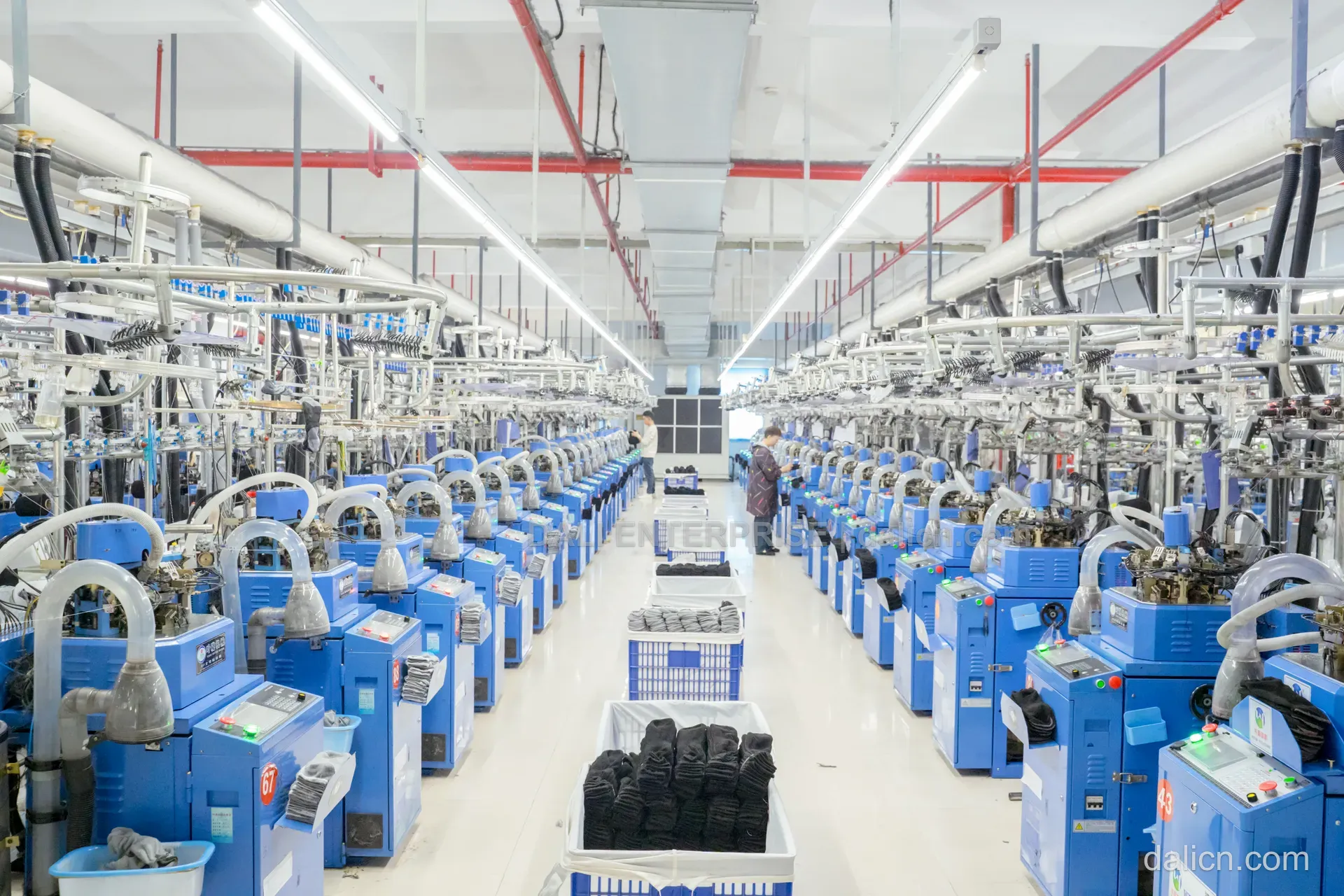
For a brand or retailer comparing Cambodia with Vietnam, DALI offers a connected route: fabric development, dyeing, elastics and testing in China, combined with established garment and sock production in Cambodia. Your team can assess materials, production and import costs with one manufacturing group.
| Your requirement | What DALI provides | Value for your buying team |
|---|---|---|
| Material choice | Fabric, dyeing, elastic and testing capabilities in China. | Keep material development connected to garment production. |
| EU import cost | A Cambodia route that can use Chinese fabric for eligible duty-free garments. | Compare landed cost without automatically changing your fabric source. |
| Bulk production | Three existing Cambodia factories, operating since 2015. | Plan with an established manufacturing network. |
| Future growth | A new production campus, now in trial production. | Discuss expansion alongside current production needs. |
Underwear sourcing with Chinese fabrics
Keep fabric, fit and branded waistbands connected when comparing production countries. DALI combines its China-based fabric, dyeing, elastic and testing operations with Cambodia garment production. For your underwear range, the same manufacturing group can review the material references, sample approvals and proposed bulk location together.
Keep Chinese fabric. Assess EU duty savings.
For eligible garments, Cambodia's EBA rules allow Chinese fabric to be made into clothing in Cambodia and enter the EU duty-free, subject to origin requirements. That can combine the material choice your collection needs with a lower import cost.
Simply cutting and sewing Chinese-made fabric in Vietnam generally does not qualify for EVFTA preferences. Cambodia can therefore offer a useful advantage for suitable products. It is not a zero-duty route for every garment: confirm the product and applicable rate before comparing quotations.
Plan bulk orders with established production
DALI's three existing Cambodia factories have 80 garment production lines and 700 sock-knitting machines. Across China and Cambodia, the group has an annual capacity of 180 million pieces and has served more than 100 brands. Your order's factory allocation and delivery window are agreed against the actual requirements.
Room for your next stage of growth
The new Phnom Penh Special Economic Zone campus adds a 36,000 m² site and 30,000 m² of building space to DALI's expansion plan. It is in trial production, not yet fully operational.
The plan includes 30 garment lines and 1,000 sock-knitting machines, alongside solar generation, energy storage and workplace-safety upgrades. For a multi-season collection, it provides a concrete expansion project to discuss as commissioning progresses.
Bring your supplier standards into the discussion
Material quality, workplace standards and continuity of supply belong in the same sourcing decision. DALI's workplace commitments include voluntary adult employment, training and on-site medical support.
The group's audit and certification portfolio includes WRAP, amfori BSCI, Better Factories Cambodia, OEKO-TEX and GOTS. During supplier review, your team can discuss the records relevant to the proposed factory and products.
Product eligibility and further details
Can clothing made with Chinese fabric qualify for EU duty-free entry from Cambodia?
Yes, for eligible cut-and-sewn garments that meet EBA origin requirements. Imported fabric, including Chinese fabric, can be used. The exact product code, origin evidence and rate for the import date must be checked; the benefit does not apply to every garment.
Does EVFTA require every raw material to come from Vietnam?
No. Many garments require fabric production as well as making-up, but EU-origin materials and qualifying Korean fabrics can be used under the relevant cumulation rules. Product-specific alternatives may apply. Cutting and sewing Chinese-made fabric in Vietnam alone generally does not establish EVFTA origin.
Which garments need a separate EU duty check?
Women's knitted underwear and sleepwear under heading 6108 and knitted babywear under 6111 are not on the EU's 2020 Cambodia partial-withdrawal list. Men's underwear under 6107 and 6207, bras under 6212 and many sock subheadings are included. Confirm the exact classification rather than assuming the whole range is duty-free. Other destinations have their own rules.
How much could the import-duty difference be?
As an illustration, the 2026 EU conventional duty for women's cotton knitted briefs under CN 6108 21 00 is 12%. If eligible Cambodia goods enter at 0% while the alternative attracts 12%, the difference on EUR 1 million of customs value is EUR 120,000, before VAT and other costs. This is a conditional calculation, not a saving promised for every order.
Is the new Cambodia campus fully operational?
No. It has entered trial production. The 30 garment lines and 1,000 sock-knitting machines are planned capacity, not a statement of current availability. Solar generation, storage and safety upgrades are in the development plan; the Life and Building Safety (LABS) milestone is targeted for Q1 2027.
What does DALI's annual capacity figure cover?
The 180 million pieces figure is the group-wide annual capacity across China and Cambodia. It is not the capacity of the Cambodia factories alone. Capacity available for an order is confirmed with the production schedule.
Who pays the import duty?
Under standard FOB, FCA, CIF or DAP terms, the buyer handles import duties. Under DDP, that responsibility sits with the seller. Use the same trade term when comparing quotations and confirm the allocation in your contract.
Trade rules and official references
- EU trade arrangements with Cambodia
- EU partial withdrawal: product headings
- EU GSP product-specific origin rules: Annex 22-03
- EU-Vietnam tariff schedules and origin protocol
- 2026 EU customs tariff: Regulation 2025/1926
- EVFTA cumulation with qualifying Korean fabrics
- Import duties and Incoterms responsibilities
Tell us about your next collection.
Send the product, estimated quantity, destination and delivery window to [email protected], or use our inquiry form. Include material references or a tech pack if available.
Discuss your collection