DALI manufactures babywear for brand and retail programs. Review bodysuits, rompers and coveralls against your measurement, closure, material and destination requirements.
DALI's portfolio includes the factory assessments and textile standards shown below. Supporting records and their applicable site, material and product scope are provided during supplier approval.
Private-label babywear
Products for your brand and retail range
Develop bodysuits, creepers, rompers and coveralls for a brand or retail assortment. The starting point is the intended age or body-size range, destination market and garment specification. Fabric feel, openings, seams, fastenings and label positions need to be reviewed together, with the buyer's product requirements established before approval.
A babywear manufacturing brief should distinguish bodysuits, rompers and coveralls, with the intended age range for each style. Share the destination market and fastening requirements early. Product safety requirements and sample checks are agreed for the actual garment, not inferred from a general baby-clothing description.
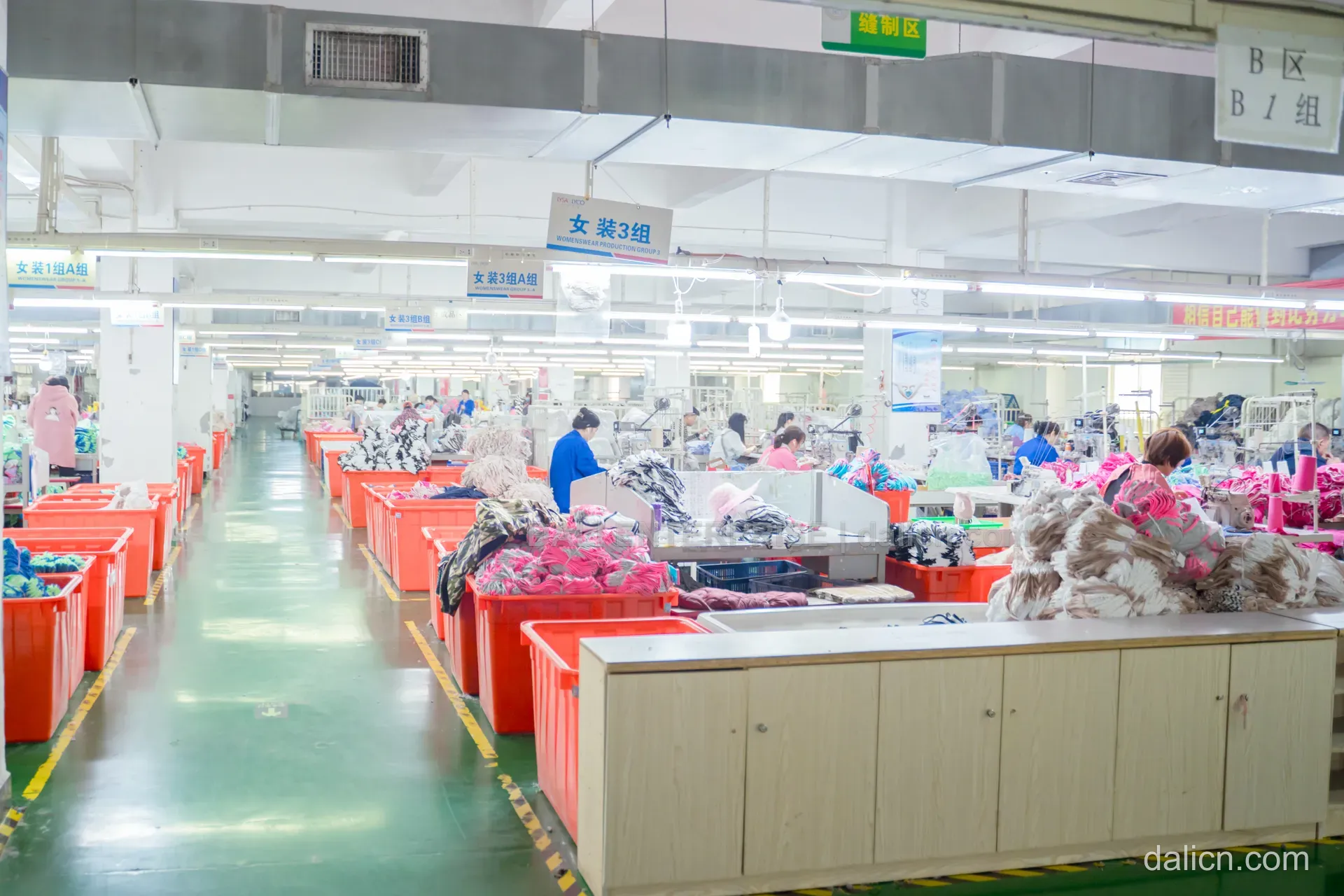
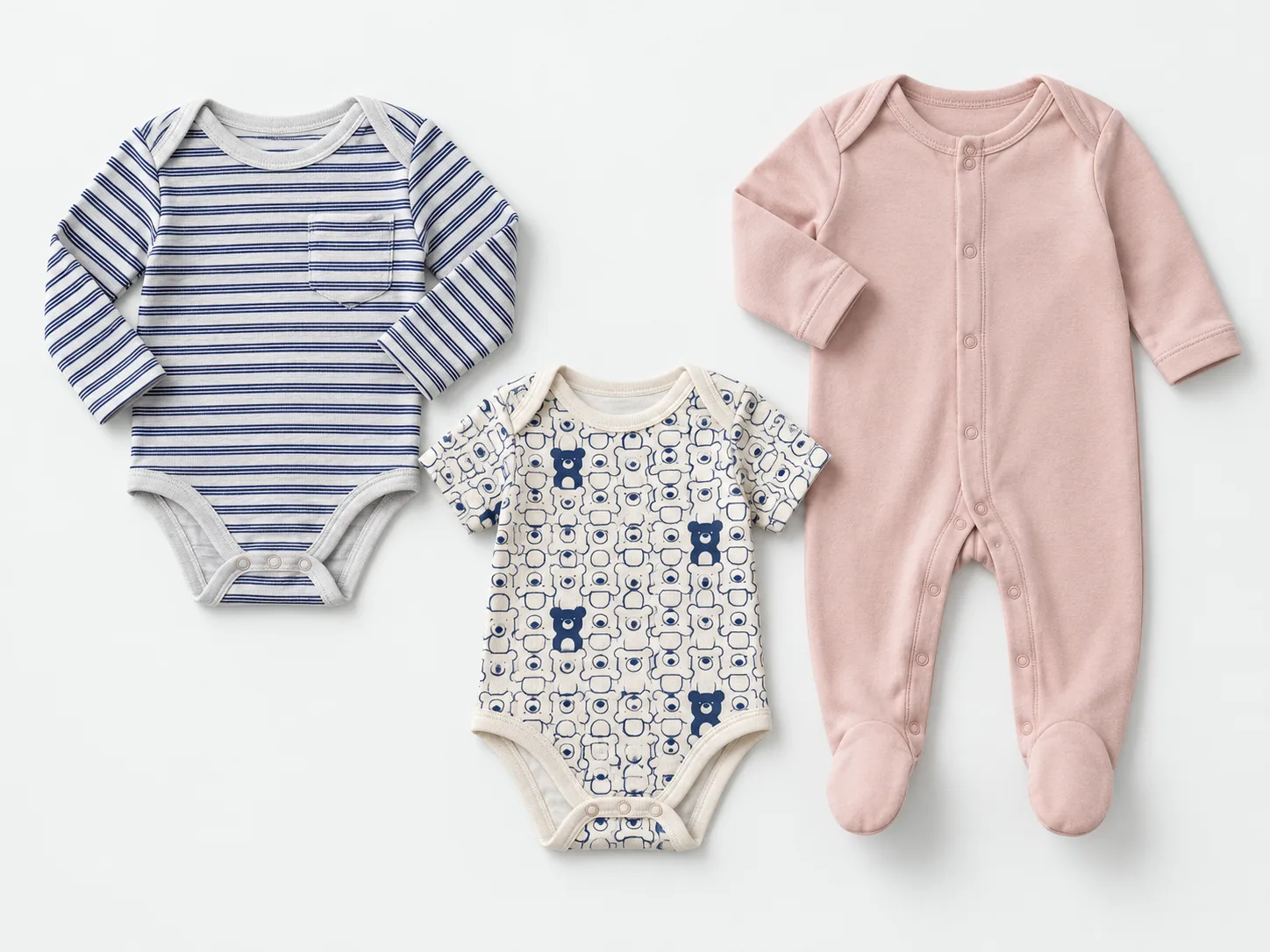
Babywear range illustration.Garment production floor, Jinjiang.
Bodysuits: specify neck opening, body length and fastening placement.
Creepers: define the intended fit and garment construction.
Rompers: connect sleeve and leg lengths with the seasonal assortment.
Coveralls: review openings, closures and size coverage together.
Openings, snaps, seams, measurements and material feel need a defined reference. DALI's garment development and production teams can review these details against your buyer brief. The destination and testing protocol identify the requirements to address for the actual product.
An age label does not fully define garment fit. Provide body-size or measurement references and show how styles vary across the range. Clarify sleeve and leg length, room for movement and the intended season. For a coordinated collection, maintain a size matrix across styles so the sample and order quantities describe the same assortment.
Identify the intended wearer and destination market.
State garment measurements separately from age labels.
Record any style changes between size groups.
02
Review fabric, seams and fastenings
Specify composition, weight and material feel for the intended use. Mark seam positions, neck openings, snaps, other closures and label placement on the drawing. Sample review should include the garment's construction as well as its appearance. Any required fastening, chemical or other product tests must be explicitly agreed with the buyer's specification.
Describe where fastenings and trims are positioned.
Check sample construction against the approved drawing.
Do not use a material certificate as a substitute for product review.
03
Bring buyer requirements into development early
Share the buyer manual and required tests before sampling where possible. Label wording and presentation depend on the product and destination market. Agree test methods, acceptance criteria, documentation and responsibilities for the actual order. Review factory assessments, material certificates and finished-product tests separately. Each record should match the relevant production site, material or garment and the destination requirements.
Identify the market and applicable buyer requirements.
Track label artwork and test requirements by product version.
Connect garment quantities to hanger, folded or multipack presentation.
Procurement specification
Babywear development requirements
Decision
Your starting information
Discussion with DALI
Age and fit
Age/body-size range and measurement references
Size plan, sample sizes and measurement tolerances
Fabric and details
Material selection, seam drawing and fastening layout
Sample construction and required evaluation
Market requirements
Buyer manual, required tests and label wording
Applicable methods, responsibilities and documentation
Assortment and pack
Style/size quantities and selling-unit format
Label identity, barcode and carton configuration
Connect age ranges to a measured size specification
An age label alone does not define a bodysuit or romper pattern. Connect sizes to garment measurements, opening positions, seams and trims. Share the buyer's safety and testing requirements before sample approval.
Pieces by style, age label and measured size
Neck and leg openings, snap positions and seam details
Fabric, print and labels in contact with the wearer
Buyer manual, testing protocol and sample approval owner
Review product safety separately from factory approval
DALI brings fabric, openings, seams, fasteners and labels into one garment-development review. The agreed size reference and sample comments guide construction and production checks. Product tests for the intended wearer and market are handled separately from the factory's workplace assessment, so one document is not used to stand in for both.
Frequently asked
Buyer questions
01Which babywear products are in DALI's portfolio?
DALI manufactures bodysuits, rompers and coveralls. Send the style, age or size range and estimated volume for the proposed program.
02Can development start before my buyer manual is complete?
An initial discussion can start with the product idea and market. Identify missing requirements clearly; testing and approval criteria need to be agreed before production approval.
03Does a material certificate replace testing of the finished babywear product?
No. Factory assessments, material certificates and product tests have different scopes. The applicable requirements must be reviewed for the actual garment, wearer and destination market.
04What information helps with a babywear sample?
Share a design reference, age/body-size range, measurements, material selection, fastening layout and any known tests or buyer requirements. Mark any details that are still undecided; a complete specification is not required for the initial discussion.
Product development and supply
Discuss development of babywear.
Discuss the intended wearer, size range, fabric and garment reference. DALI connects sample development with fastening, labeling and buyer requirements for the proposed babywear range.